Wildlife of Asia
From the continent’s largest snake to the masters of disguise in the insect world.
Visitor favourites
Click any of them and its description opens in the list below.
Residents of Asia
57 species. Click a name for details.
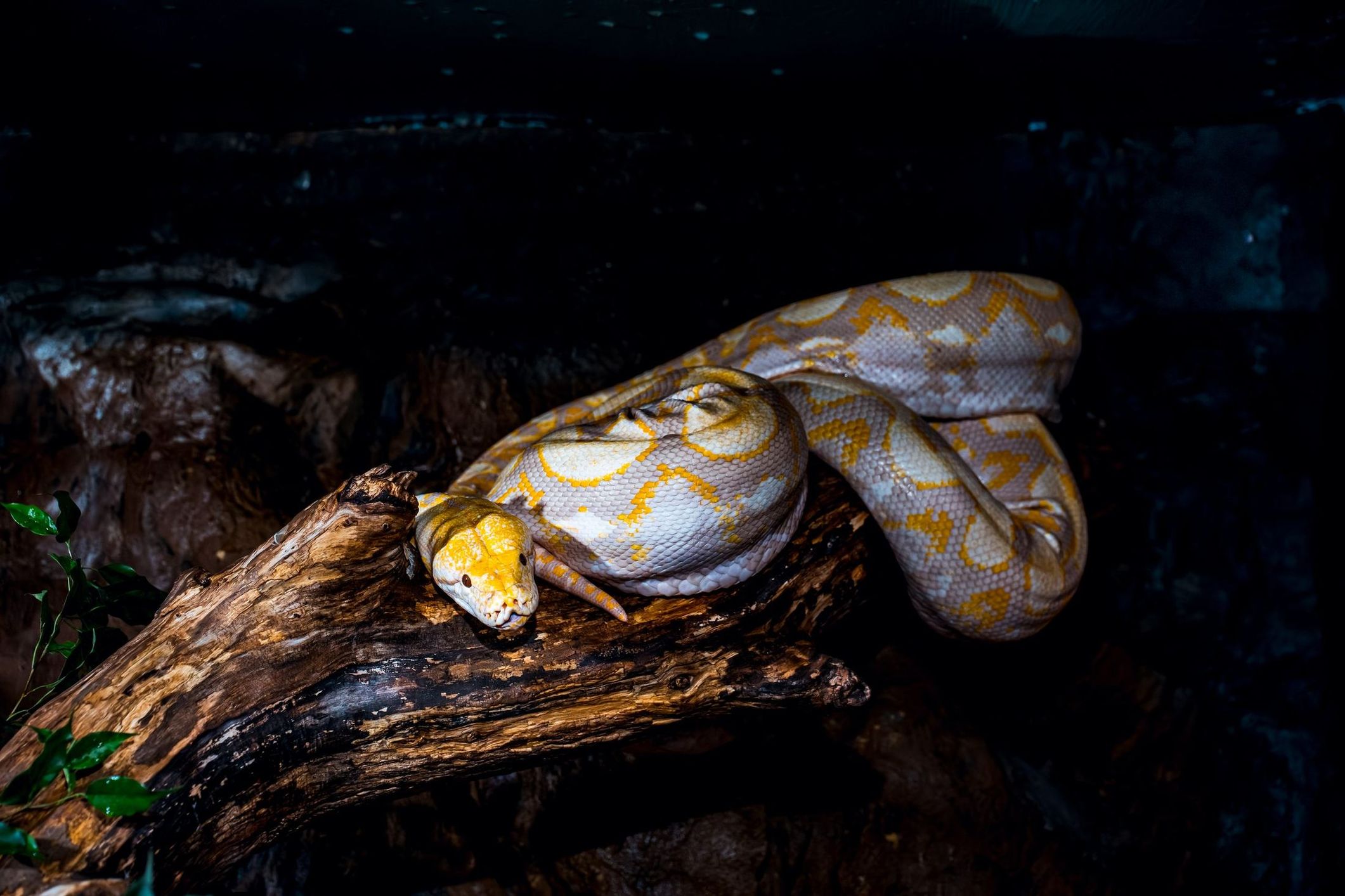
Albino reticulated pythonMalayopython reticulatusLeast Concern
Albinos and dwarfs
The albino reticulated python is a colour variety bred in captivity, easily recognised by its distinctive light colour and yellow pattern. In the wild this variety is not viable, because its colouring completely lacks the darker pattern that aids camouflage, so predators would easily spot it.
The albino variety arises from a genetic mutation: because of a naturally occurring recessive gene change, melanin, the dark pigment, is completely absent from the skin, so the snake’s base colour becomes light, yellowish-white, without the characteristic dark pattern. This mutation occurs very rarely among wild reticulated pythons, so the albino variety developed only in captivity, through selective breeding. Breeders carefully pair carrier animals so that the albino gene is inherited from both parents, which allows fully albino offspring to be born. Even if two normally coloured animals that carry the albino gene are paired, albino offspring can still be born.
Interestingly, besides the albino reticulated python, several other varieties are known in terrarium conditions that differ markedly in colour and pattern from wild specimens. “Dwarf” reticulated pythons are also known, which in the wild occur on a few islands of Indonesia. Adults often stay around 2–3 metres long, unlike mainland reticulated pythons, which can reach as much as 6 metres. In the terrarium hobby, “dwarf” varieties are often produced by selective breeding.
Although the reticulated python is a popular terrarium animal abroad, in Hungary it is classed as a moderately dangerous species, which is exactly why keeping one at home is possible only with the appropriate permits.
Amano shrimpCaridina multidentataNot Evaluated
The Amano shrimp is one of the best-known algae-eating shrimp species in the aquarium hobby. It constantly cleans the substrate, rocks and plants, eating algae and organic debris as it goes. It is a social species that moves in small groups. Its reproduction is unusual, because in the early stages of development its larvae need a salt-water or brackish environment.
Grass carpCtenopharyngodon idellaLeast Concern
The fish that even eats reeds
The grass carp is a large, herbivorous fish. It is not native to Hungary but an introduced species. Its homeland is East Asia, mainly the area stretching from southern Siberia to the central river systems of China, and its Hungarian name comes from the Amur River. Its eyes are set slightly forward on the sides of its head, which is unusual among fish and lets it observe its surroundings better while feeding. It is a herbivore, eating mainly aquatic plants, pondweed, reeds and algae. Interestingly, grass carp can “devour” entire patches of reeds, so introducing them helps control aquatic vegetation. It is regarded as a popular angling fish, since large specimens can reach 15–20 kilograms. The grass carp’s ability to adapt to its environment is remarkable, as it can cope with both slow and fast water.
Asian forest scorpionHeterometrus petersiiNot Evaluated
A fierce look, devoted parenting
The Asian forest scorpion is one of the largest scorpion species in the world, an eye-catching sight with its massive, glossy black body and powerful claws. Its appearance may be frightening at first, but it is a relatively calm animal that prefers to avoid conflict and attacks only when cornered, as a last resort. Its body is covered by a thick chitinous armour that protects it well from outside influences, while the strong claws serve mainly for seizing prey. Generally speaking, scorpions with large claws but a stinger that is small relative to their body have relatively weak venom. For a freshly moulted scorpion, some time must pass before its armour hardens, so it is especially vulnerable during this period. The venom of the Asian forest scorpion is generally no more dangerous to humans than a wasp sting. When in danger it adopts a characteristic defensive posture: it spreads its claws and raises its tail threateningly over its back. It is an active hunter at night and hides by day under stones, tree bark or in burrows.
Interestingly, when mating, the male and female lock claws and perform a spectacular courtship dance. The fertilised eggs hatch inside the mother’s body, and the young leave her already alive. The young spend the first days of their lives clinging to the mother’s back, until they become independent after their first moult. Until then, the mother protects her family.
The Asian forest scorpion is not considered a dangerous animal in Hungary. It is relatively common in zoos and terrarium keeping. For scorpions kept as pets, providing high humidity and hiding places is key. Although it is not particularly aggressive, keeping one is not recommended for beginner pet keepers.
Bali mynaLeucopsar rothschildiCritically Endangered
The starling saved from extinction
The Bali myna, if we look at the birds found in the wild, is one of the rarest bird species in the world. Its snow-white plumage, long crest and vivid blue skin around the eyes give it an extremely elegant look. It is native exclusively to the island of Bali, which is where it gets its name. In the wild it usually moves in pairs or small family groups. It stays mainly in the tree canopy, where it looks for fruit, seeds and various insects. Its voice is varied, made up of chirping and whistling sounds. Its flight is fast and straight, and it manoeuvres skilfully among the trees.
Because of its beauty, the Bali myna was for a long time a sought-after ornamental bird, and many were captured from the wild. As a result of illegal trade and habitat loss, its population dropped drastically, and at one point only 30 individuals remained in the wild. Fortunately, it breeds well in captivity. Today strict conservation programmes and breeding projects help the species survive. European zoos keep and breed it in a coordinated way, within the European Endangered Species Programme.
Purple-headed barbBarbus nigrofasciatusVulnerable
During the spawning season the head and front of the body of males take on a deep reddish-purple shade. In its natural habitats it often lives in soft-water streams covered with leaf litter. In aquarium conditions, kept in a shoal, it shows calmer and more natural behaviour. It feeds mainly on small invertebrates and plant-based food. Its wild populations are threatened by habitat alteration and deforestation.
RoachRutilus rutilusLeast Concern
Rudd or roach?
The roach is a medium-sized, common freshwater fish found in almost every type of water in Hungary. Its appearance is very similar to the rudd’s, so the two species are often confused. The most important difference is that the roach’s body is less golden in tone and more silvery, its fins are a paler red than the rudd’s fins, and its mouth ends at the tip rather than pointing upward as the rudd’s does. Its eye is usually reddish, which also makes accurate identification easier. Its diet is similarly varied, including both plant and animal food. It is a common catch among anglers and a well-known fish even for beginners. In 2022 the Hungarian Ichthyological Society named it Fish of the Year.
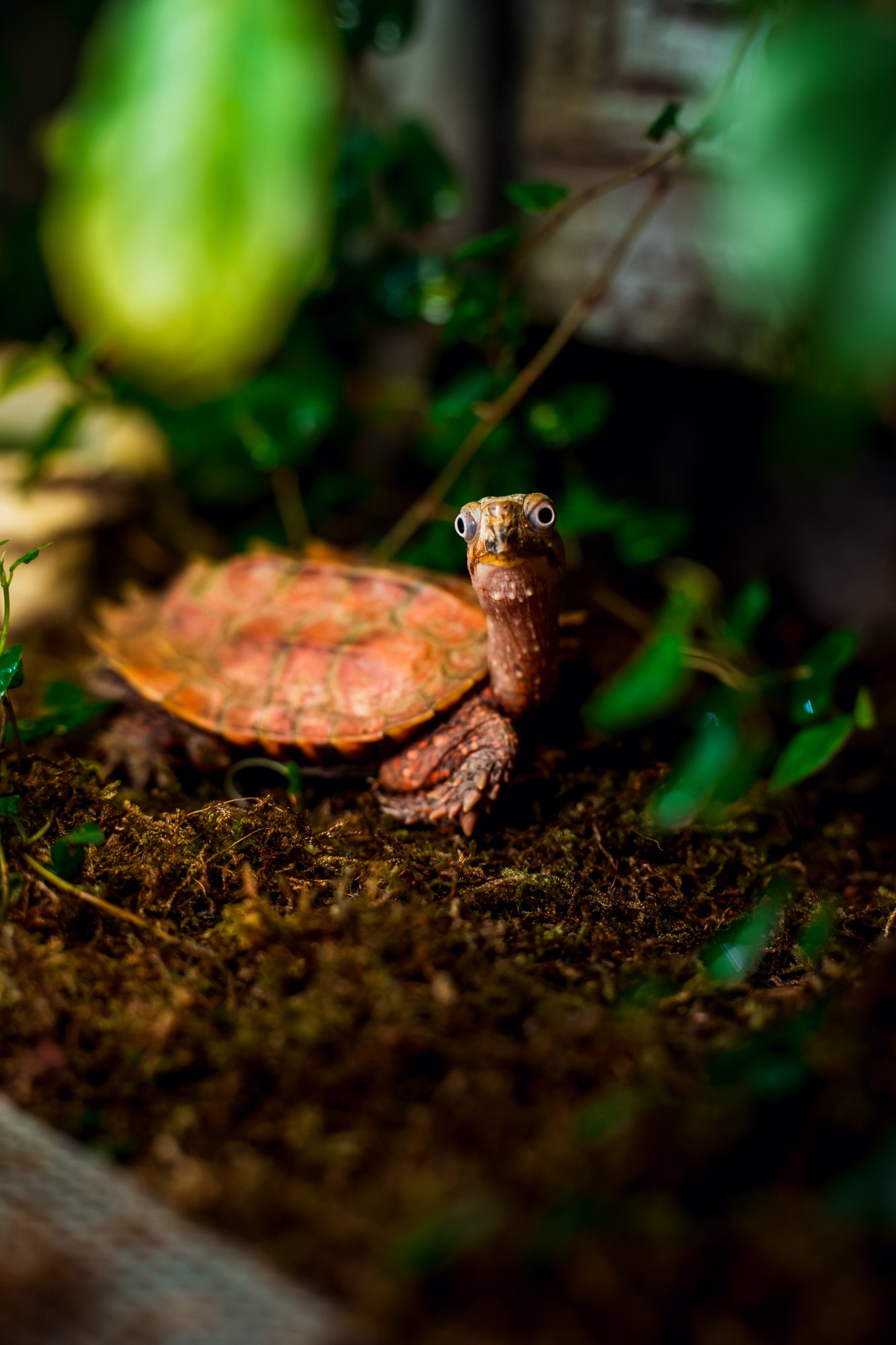
Black-breasted leaf turtleGeoemyda spengleriEndangered
A turtle that is an excellent climber
The black-breasted leaf turtle is named after its strongly serrated shell, which gives it an appearance like fallen leaves. This distinctive pattern helps with camouflage, hiding it almost completely from predators moving on the ground. Its dark brown and black shell makes it almost invisible in the forest leaf litter.
Its movement is slow and cautious, and it mostly stays in the thick forest undergrowth. If it senses danger, it withdraws into its shell and stays motionless for a long time. Its diet is varied: it eats small invertebrates, worms, insects and fallen plant parts. Its reproduction is relatively slow, as the female lays only 1–2 eggs per clutch.
Unlike most turtle species, the black-breasted leaf turtle is a surprisingly skilful climber: with its strong claws it easily scrambles up roots, rocks and lower branches. In its natural habitat it often hides in damp leaf litter or among mossy tree trunks, where its pattern gives it excellent camouflage. Its eyes are relatively large and bright, which helps it find its way and search for food, especially during dusk activity. The species is calm by nature but can become extremely withdrawn under stress, so when kept in a terrarium it is especially important to provide hiding places and an undisturbed environment.
Because of shrinking habitats and the illegal animal trade, its population is declining, which is why it is classed as an endangered species. It is a popular pet, but because of its high price and special care requirements it is relatively rarely seen.
Iridescent sharkPangasianodon hypophthalmusEndangered
Shark or catfish?
Despite its name, the iridescent shark is not a true shark but a large catfish. Unlike most catfish species, it swims actively, and its movement as well as its looks resemble sharks. Its body is a shimmering silver, and in youth darker stripes run along its sides.
The species’ natural habitat is tied to the great river systems of Southeast Asia. Young fish often swim in large shoals, which protects them from predators. It is an omnivorous fish that in its natural environment also eats smaller fish, molluscs, aquatic invertebrates and plant-based food. Because it grows fast, it is farmed for food in many countries around the world. Its meat is popular in many places and of great commercial importance. In Hungary, the iridescent shark’s meat is sold as pangasius fillet.
Young iridescent sharks are popular ornamental aquarium fish. Many buyers, however, are unaware that these fish grow extremely large, so they can be kept properly only in a huge aquarium or display tank. In cramped quarters they easily become stressed and may make sudden movements and crash into the tank wall. It is basically peaceful and can be kept with other species.
Bala sharkBalantiocheilos melanopterusEndangered
The shark of the carp family
The bala shark’s name can be misleading, as it is not a shark. In fact it is a freshwater fish of the carp family that got the name “shark” from its streamlined body and tall dorsal fin. Its shimmering silver body and black-edged fins make it especially striking. The species’ natural habitat is Southeast Asia, where it lives in larger rivers and lakes. Young fish often move in small groups, while adults can form large shoals. Because of their social behaviour, it is recommended to keep several together in an aquarium too.
The bala shark is a peaceful fish, which is why it is a popular species in the aquarium hobby. It is an active fish that needs plenty of swimming space. It is a skittish aquarium dweller: at a sudden noise or movement it quickly flees and may even jump out of the water. For this reason, a covered aquarium is recommended for keeping it.
It is an omnivorous fish. In its natural environment it eats small invertebrates, insect larvae, algae and plant parts. Kept in an aquarium, it needs a varied diet. In good conditions it grows quickly, so it needs a large tank. The number of wild populations has fallen significantly in recent decades. Habitat destruction, water pollution and overfishing all threaten the species’ natural stocks. In some areas it is already considered rare in its natural environment, while in the aquarium hobby it has become a fish species that is widespread and bred worldwide.
TenchTinca tincaLeast Concern
A lesser-known carp relative
The tench is a medium-sized, stocky freshwater fish that lives mainly in slow-flowing waters, lakes and floodplains. It belongs to the carp family, but its economic importance is much smaller than the carp’s. Compared with its larger relative, it is a less well-known fish. Its body is covered in tiny, slimy scales that make it smooth to the touch. Its colour is usually dark greenish or brownish, with silvery shimmering sides. It especially likes areas covered with dense aquatic vegetation, where it can hide among the plants. It feeds mainly on aquatic plants, algae and small invertebrates. It is mostly active at night and often hides among vegetation by day. It breeds in spring, when it moves into shallow, densely vegetated areas to spawn. The tench grows slowly but is long-lived and can reach 15–20 years. In recent years the tench has become a popular fish for ornamental ponds. Several colour varieties have been bred in captivity, such as the golden tench, which is also on display at Tropicarium.
Jungle mynaAcridotheres fuscusLeast Concern
The rhino’s friend
The jungle myna is a member of the starling family. Its plumage is a brownish-grey shade, its head is darker, and on its forehead there is a tuft of feathers that can be slightly raised. Its yellow bill and legs make it easy to recognise.
This species is extremely social by nature and often moves in smaller or larger flocks. It likes to stay near human settlements, where it easily finds food. Its diet is varied: it eats insects, fruit, seeds and smaller animals. It is considered useful in agricultural areas because it destroys many pests. It often accompanies larger animals, such as Indian rhinos, picking parasites off the bodies of these large herbivores.
The jungle myna is an excellent mimic. In captivity it can imitate simple sounds, whistles and even human words. Although its wild population is currently stable, habitat changes may affect its populations in some areas. It is rare in zoos; in May 2026, including Tropicarium in Budapest, it was on display in only 4 zoos in the world.
Espei rasboraTrigonostigma espeiNot Evaluated
The Espei rasbora has a distinctive wedge-shaped dark marking on its side, by which it is easily recognised. It resembles the well-known harlequin rasbora but is smaller. It is a shoaling fish that in its natural environment moves in larger groups in densely vegetated waters. It eats small invertebrates, planktonic organisms and plant-based food. It is a calm, lively species that feels especially at home in dimly lit, tannin-rich water.
Prussian carpCarassius gibelioLeast Concern
The goldfish’s silver ancestor
The Prussian carp is a medium-sized, stocky freshwater fish that, thanks to its good adaptability, can live in almost any kind of water. Like the other fish species in the aquarium, it belongs to the carp family. It is not native to Hungarian fauna: it is an introduced species originally from East Asia that has adapted extremely well and has multiplied in huge numbers in many of our waters. Interestingly, it is a close relative of the goldfish, being its wild ancestor. The wild Prussian carp differs considerably from the domesticated form: its body is deep and laterally flattened, and its colour is silvery-grey, which is how it got its Hungarian name (“silver crucian”). In terms of diet it is omnivorous, mainly filtering its food from the mud and eating tiny organisms and organic matter.
ChubSqualius cephalusLeast Concern
Why is the chub called the “headed” chub?
The chub is a medium-sized, elongated freshwater fish found mainly in rivers and streams, but also in still waters. It belongs to the carp family. In Hungary it is a particularly common species, found in almost all our natural waters. Its Hungarian name (“fejes”, meaning “headed”) comes from its distinctive, disproportionately large, thick head: the word refers to this robust skull, which is especially conspicuous in size compared with the rest of the body. This big head hides a strong jaw, which helps the fish in its omnivorous feeding. Although the chub also eats plant food, whenever it can it happily supplements its diet with other animals, such as smaller fish. It is a popular catch among anglers, though its culinary value is moderate because of its many small bones. It grows at a medium rate, but under favourable conditions it can grow fairly large and live for more than a decade.
Pearl gouramiTrichopodus leeriiNot Evaluated
One of the best-known labyrinth fish, very commonly kept in aquariums. Males build a bubble nest on the water surface when spawning, using plant debris and mucus in its construction. It is calm by nature but becomes territorial during the spawning season. With the right light falling on it, its pattern shimmers with a mother-of-pearl sheen.
The species is sensitive to sudden changes in water quality.
Half-banded spiny eelMastacembelus circumcinctusNot Evaluated
By day it often burrows into the substrate, with only its head showing. At night it is an active hunter, finding its way by smell and tiny vibrations. Its flexible body lets it get into narrow crevices. It is a popular aquarium species, but when keeping it, it is important to provide enough hiding places.
Despite its long, snake-like body, it is not a close relative of true eels. Its colouring helps it hide on the substrate. The species is sensitive to sudden environmental changes, especially fluctuations in water quality.
Hengel’s rasboraTrigonostigma hengeliNot Evaluated
The orange stripe of light along the body of Hengel’s rasbora is especially spectacular when lit from the side. It resembles the well-known harlequin rasbora, but its pattern differs slightly. It lives in small shoals in which individuals move closely together. In its natural habitats it often occurs in acidic, dark-water streams. It eats tiny insect larvae and planktonic organisms. It constantly searches the open water for food.
Seven-spot archerfishToxotes chatareusNot Evaluated
The seven-spot archerfish is one of the largest members of its genus. It is named after the large dark spots on its sides. Thanks to its powerful build, it hunts not only with jets of water but often leaps right out of the water to catch prey. In the wild it is often seen among the roots of mangrove trees, lurking near the surface for insects and smaller animals.
Indian glass catfishKryptopterus vitreolusNot Evaluated
The Indian glass catfish’s body is almost completely transparent, so its skeleton and internal organs are clearly visible. Its translucent body helps it fool predators in dark-water habitats. It is a shoaling species that swims in coordinated movement and stays mainly in the middle of the water column. It is extremely sensitive to deteriorating water quality and sudden environmental changes. Its barbels help it find its way and search for food.
Indian glassy fishParambassis lalaNot Evaluated
The Indian glassy fish’s body is partly translucent, which gives it a distinctive look. It is a shoaling species that searches for food in open water. In its natural environment it eats insect larvae, tiny crustaceans and planktonic organisms. Males may show more intense colouring during the breeding season. It is a calm fish that adapts well to different types of water.
Banded archerfishToxotes jaculatrixNot Evaluated
Despite its Hungarian name (“Javan”), it is not native only to Java. The banded archerfish is one of nature’s best-known “sharpshooters”. Thanks to the special structure of its mouth cavity, it can shoot a precise jet of water, knocking insects sitting above the surface into the water. A larger fish can hit its target with surprising accuracy even from several metres away. It often lives in small groups, and younger fish frequently hunt together in shallow coastal zones.
SterletAcipenser ruthenusVulnerable
Hungary’s smallest sturgeon
The sterlet is a medium-to-large fish found mainly in flowing waters and belongs to the sturgeon family. It is a relatively rare species in Hungary, found mainly in the larger stretches of the Danube and the Tisza. Its body is elongated and laterally flattened, its back is dark olive-green, its sides shimmer silver, and its belly is pale. Its mouth is located underneath, and it uses its barbels to sense food on the bottom, which consists mainly of invertebrates, molluscs and smaller crustaceans. What makes the sterlet special is that, like other sturgeons, it often chooses the gravelly, sandy stretches of the original riverbed for spawning, where the young hide among sand and silt. The sterlet is the smallest sturgeon in Hungary, although some individuals can grow to 50–70 cm in length and 2–3 kg in weight, though in our waters larger specimens are rarer.
The sterlet is extremely sensitive to water quality: it needs clean, oxygen-rich flowing water, and its presence is often an indicator of a river’s ecological condition. An albino colour variety has also been bred in captivity, and it too is on display at Tropicarium.
Blue botiaBotia modestaNot Evaluated
A more robust ornamental striped species that also eats larger prey.
Young individuals often have brighter markings, which fade with age. It is often found in deeper, slower-flowing stretches. Its strong jaws allow it to eat even harder-shelled snails.
Blue gouramiTrichopodus trichopterusNot Evaluated
A very hardy fish that can survive even in areas with poor water quality. During breeding, the males build bubble nests. With its labyrinth organ it also takes in atmospheric oxygen.
In the wild it often lives in habitats where the water level changes. Its diet includes algae and small invertebrates. Males have a longer, trailing dorsal fin, while females have a smaller, rounded one.
Chinese stripe-necked turtleMauremys sinensisEndangered
Endangered Asian turtles
The Chinese stripe-necked turtle is one of East Asia’s most distinctive freshwater turtle species. It gets its name from the yellowish or pale stripes running along its head and neck, which stand out clearly against its darker base colour. Its shell is usually brownish or olive-green and slightly domed. Young turtles have more striking markings than adults. In the wild, these colours and stripes provide the turtle with excellent camouflage.
The Chinese stripe-necked turtle lives an aquatic life. It is most often found in shallow, slow-flowing waters with plenty of vegetation and many hiding places. It is an excellent swimmer. It often basks on fallen tree trunks or rocks to regulate its body temperature. When in danger, it quickly escapes into the water, where it skilfully hides in the mud or among the plants.
Its diet is extremely varied. When young, it eats mostly animal food such as insect larvae, worms and small aquatic invertebrates, while with age plant food makes up an increasing share. It eats aquatic plants, algae and fallen fruit, but may also take small fish or the remains of dead animals.
Females may lay eggs several times a year. The eggs are usually laid in a nest dug into loose soil near the water’s edge, where the developing embryos hatch after about 2–3 months. Young turtles fall prey to many predators, so only a few reach adulthood. Surviving individuals, however, can live for 30–40 years under suitable conditions.
The Chinese stripe-necked turtle is a calm, eye-catching animal, so many people keep it as a pet in terrariums. It is also a common species in European zoos. Its wild populations, however, have declined significantly in recent decades. Habitat destruction, pollution of wetlands, and the Asian food and animal trade all threaten the survival of the species. Several breeding programmes have already been launched to help it survive. European zoos keep and breed the species in a coordinated way within the European conservation breeding programme.
Reticulated pythonMalayopython reticulatusLeast Concern
The longest snake
The reticulated python is the longest snake species in the world, with a body length that can exceed 6 metres, making it longer than the green anaconda. In terms of overall bulk, though, it is the green anaconda that stands on top of the imaginary podium, as the reticulated python has a long, slender build and is not as robust as the anaconda.
In the wild, female reticulated pythons are generally larger, stronger and longer than males, which is typical of most giant snakes. This size difference is linked to egg-laying, as a longer body allows a female to lay more eggs.
Like other snake species, the reticulated python is a predator: it mainly eats small and medium-sized mammals, birds and, less often, other reptiles. Feeding frequency varies; young snakes eat once or twice a week, while adults feed less often. Because of its size, a reticulated python could in theory catch and swallow larger prey such as a young deer or goat, especially if it really is a healthy 5–6 metre animal. These are, however, extremely rare cases. In the wild, most reticulated pythons hunt small and medium-sized prey (e.g. rodents, birds, rabbits). The legend that after bringing down large prey a snake will not eat for up to a year is an exaggeration, although after eating a larger prey animal it can take 2–4 months before the python starts hunting again.
The reticulated python is not an aggressive snake by nature, although it defends itself determinedly if it feels cornered. It is basically not dangerous to humans: large specimens are able to grab a person, but they do not attack deliberately, and most known incidents stem from defence, for example a sudden grab. The myth that a reticulated python snatches sleeping children at night is completely unfounded; a human is too large a prey for it, and in the wild it mainly hunts small mammals.
Interestingly, in the reticulated python pair living at Tropicarium, this rule works the other way round: the male is much larger than the female, which is rare but not unheard of among captive animals.
White Cloud Mountain minnowTanichthys albonubesVulnerable
The White Cloud Mountain minnow is one of the best-known and hardiest small aquarium fish. Its Hungarian name, “hummingbird fish”, comes from its lively, flashing movements, which resemble the hovering of hummingbirds. Kept in a shoal, it shows its most beautiful colours and natural behaviour. It tolerates cooler water temperatures well, so it is more adaptable than many other tropical ornamental fish.
Blyth’s archerfishToxotes blythiiNot Evaluated
The body of the Blyth’s archerfish is decorated with irregular dark spots, which give it good camouflage in coastal waters dotted with roots and shadows. Although this species can also hunt with a jet of water, it often catches its prey by swimming right near the surface. Its eyes are superbly adapted to sense movement both below and above the water surface at the same time.
MudskipperPeriophthalmus papilioNot Evaluated
Fish that hop on land
It lives in brackish areas and mangrove forests bordering the Indian Ocean. It is sometimes also called the mud-hopping goby. It is a fish with a remarkable appearance and an unusual way of life. It looks rather like a frog. It can leave the water for shorter or longer periods and moves about on land. Researchers believe that the very first amphibians to venture onto land may have looked much like today’s mudskipper. Mudskippers climb and jump surprisingly well. On land, the goby moistens its eyes with the help of its pectoral fins. Both the skin and the lining of the mouth cavity of mudskippers take part in breathing, so they must keep their bodies constantly moist. Their eyes sit on top of the head, so even when partly raised out of the water they have a good view of their surroundings. Males set up their territories around burrows dug into the mud, where breeding also takes place.
It is a predator, feeding mainly on insects and aquatic invertebrates. Males are larger than females and are more colourful during the mating season. Large males aggressively defend their territory against smaller members of their own species. During fights they often spread their dorsal fins to look bigger. It is difficult to keep in an aquarium, as it needs plenty of space and a humid environment. Several specimens can only be kept together safely in a larger aquarium.
Siberian sturgeonAcipenser baeriiEndangered
Lifespan: 20–40 years
Starlet sturgeon or Siberian sturgeon?
The Siberian sturgeon, also known as the Lena sturgeon, is a medium to large freshwater fish of the sturgeon family, found mainly in flowing waters. It is primarily an inhabitant of Asia and is a rare species in Hungary, found mainly in the larger stretches of the Danube and the Drava. Its body is elongated and laterally flattened, with a dark olive-green back, silvery shimmering sides and a pale belly. Its mouth is on the underside, and with its tiny barbels it detects food on the bottom, which consists mainly of invertebrates, molluscs and small crustaceans.
Interestingly, the lifestyle and ecological needs of the Siberian sturgeon are similar to those of the starlet sturgeon, but it is far rarer in Hungarian waters. Its young can often be mistaken for the starlet, but even when young the Siberian sturgeon has a distinctly more angular head and a stockier build, slightly more compact body proportions, and longer, stronger barbels than the starlet.
Interestingly, the species prefers clean, oxygen-rich, gravelly and sandy river stretches for spawning. The Siberian sturgeon can grow up to 1.5 metres long and 20–25 kilograms, but in Hungarian waters smaller specimens of 60–80 cm are more common.
Leopard danioBrachydanio frankeiNot Evaluated
Its spotted pattern helps it hide in the dappled light, especially among dense vegetation. It is a shoaling fish that behaves much like the zebra danio, but is a little calmer. It is often seen in mixed shoals with other danios. In its habitats it lives in shallow waters broken up by plants.
Because of the variability of its colouring, several colour varieties have been developed in aquaristics. In the wild, it feeds on tiny planktonic organisms and insect larvae.
Wels catfishSilurus glanisLeast Concern
The wels catfish is a large predatory fish that lives mainly along the banks of slow-flowing waters, lakes and oxbow lakes. It is one of the largest freshwater fish in the world: some individuals can grow 2–3 metres long and weigh over 100 kilograms, although in Hungarian waters we usually meet smaller ones of 1–2 metres. Its elongated body, broad head and distinctive barbels make it an easily recognisable fish. With these barbels it senses movements in the water, which is especially important for finding its way in the dark and in murky water. It is mainly active at night and rarely moves during the day, feeding mostly on fish, crayfish, frogs and smaller aquatic creatures. The wels catfish can hunt at depths of several metres and often lies in ambush, waiting for approaching prey. It is a significant fish for anglers and an exciting target, because once hooked it tries to break free with powerful, sudden jerks, which is a serious challenge even for experienced anglers.
Malabar danioDevario malabaricusNot Evaluated
A larger, strong-swimming danio that is well adapted to flowing waters. It mainly moves in the middle and upper parts of the water column. Its shoals are looser than those of the zebra danio, but show coordinated movement. It has adapted to life in fast-flowing habitats through its strong musculature and streamlined body. It is often seen over stony, gravelly beds. Young individuals stay in smaller groups, while adults may organise into larger shoals.
Mindanao water monitorVaranus cumingiNot Evaluated
The colourful monitor of the Philippines
In Hungarian, the Mindanao water monitor is also called the yellow-headed monitor and, sometimes mistakenly, Cuming’s monitor. The animal’s scientific species name honours Hugh Cuming, a 19th-century English naturalist and plant collector. It is one of the Philippines’ spectacular but little-known monitor species. It is a medium-sized monitor; males are larger than females, with a body length of around 150 cm. The long tail makes up a significant part of the total body length. The base colour of the Mindanao water monitor is dark brown or black, speckled with yellowish dots and patches. This pattern provides excellent camouflage in the shady forest environment. For a long time the species was thought to be a subspecies of the Asian water monitor (Varanus salvator), but it has since turned out to be a separate species.
The Mindanao water monitor lives mainly on the ground, but it is an excellent climber and a good swimmer. It often stays near rivers, streams and swampy areas. When in danger, it quickly escapes into the water, where it can stay below the surface for a long time. It digs and grips skilfully with its strong claws, and uses its muscular tail for balance and defence. The Mindanao water monitor is an opportunistic predator. It eats almost any smaller animal it can bring down. Its diet consists of crustaceans, fish, frogs, birds, eggs and small mammals, but it may also eat carrion. With its forked tongue it constantly collects “scent samples” from its surroundings, which it analyses with the help of the Jacobson’s organ. This helps it track down prey.
Monitor lizards are considered intelligent reptiles. In captivity, it can quickly learn to recognise its keeper and the regular feeding times. In its natural environment, however, it is an extremely cautious and secretive animal that mostly avoids people. Females may lay their eggs in rotting tree trunks, underground burrows or termite mounds. The heat of the decaying plant matter helps the eggs develop. Young monitors have brighter markings than adults. They spend more time in the trees than adults do, where they are safer from predators, including their own adult relatives.
The species’ natural habitats are threatened by deforestation and the expansion of agricultural land. In some places it is also hunted for its meat or skin.
Croaking gouramiTrichopsis vittataNot Evaluated
The croaking gourami communicates with others of its kind through a special sound, mainly when defending its territory. It makes the sound by moving its pectoral fins in a special way. Thanks to its well-developed labyrinth organ, it can survive even in oxygen-poor waters, as it can also breathe atmospheric air. It often stays near the water surface. Its diet consists of tiny insects, insect larvae and plant matter.
Large-scale barbOliotius oligolepisNot Evaluated
It gets its name from its distinctive, chessboard-like scale pattern. It lives in small groups and mainly moves in the middle layer of the water. Males are generally slimmer and more colourful than females. In its natural environment it forages among dense vegetation and roots. Thanks to its calm behaviour, it can be kept well with other small ornamental fish.
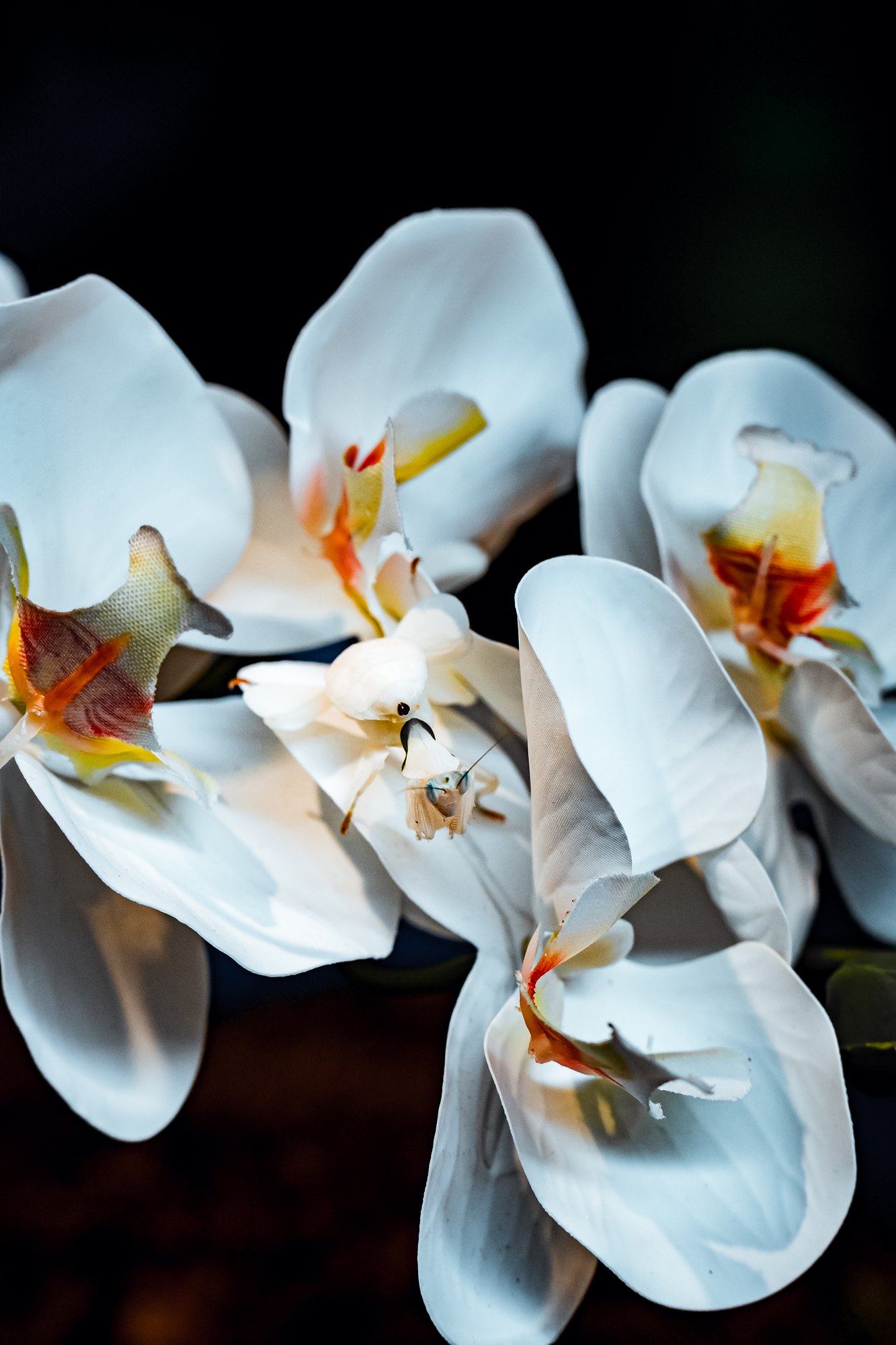
Orchid mantisHymenopus coronatusNot Evaluated
Predatory flowers
The orchid mantis is a praying mantis that displays one of the most spectacular examples of mimicry in the insect world. Its body and colouring strikingly resemble a flower, above all an orchid, which is where it gets its name. With its pinkish-white pattern and broad, petal-like legs, it blends almost perfectly into a flowery setting. This camouflage serves not only as protection against predators but is also part of an active hunting strategy: pollinating insects arriving at the flowers are easily taken by the animal’s lightning-fast raptorial legs. What makes the species special is that its body shape and colouring can change slightly during moults to match its surroundings, so it can imitate flowers even more effectively. Females are more conspicuous and larger, while males are smaller, slimmer and more agile.
During reproduction, females lay egg cases, called “oothecae”, which protect the developing young. In their youth they look different from adults, and reach their final appearance only after the last nymph stage. The young mimic ants in appearance.
The orchid mantis is a popular terrarium and zoo animal, mainly because of its remarkable appearance. Keeping it, however, takes more care than many other insects: it needs a stable warm temperature, high humidity and regular live food. It is less recommended for beginners, but is an especially exciting species for more experienced terrarium keepers.
Five-banded barbDesmopuntius pentazonaLeast Concern
Its body is decorated with five dark transverse bands, which give it good camouflage among aquatic plants. It is a peaceful, rather shy shoaling fish that prefers dimmer aquariums. In its natural habitats it lives in acidic, soft water. Its diet consists mainly of tiny insect larvae and organic detritus. In a stress-free environment its colours become more intense.
Clown loachChromobotia macracanthusEndangered
A shoaling, bottom-dwelling species that shows complex social behaviour. To a certain extent it can also make sounds, communicating with others of its kind through clicking noises. It is a long-lived but slow-growing fish. When young, its brighter orange-and-black pattern is striking, and it may become duller in adulthood. It is often found in river stretches with a muddy bottom. It is one of the most useful snail-eating aquarium fish.
Pakistani loachBotia lohachataNot Evaluated
It actively searches for food, almost constantly probing the bottom for something to eat. Like other loach species, it is helped in finding food by its barbels. It is a shoaling fish. Its pattern helps it hide. It also eats snails and small invertebrates.
The pattern of young individuals changes with age.
Paradise fishMacropodus opercularisNot Evaluated
A highly territorial labyrinth fish; aggressive behaviour can develop especially between males. When spawning, it builds a bubble nest at the water surface. It is tough and can stay alive even in extreme conditions.
Males are especially colourful during the breeding season, when their fins show a more vivid pattern. The species is one of the first aquarium fish to have reached Europe.
Common mynaAcridotheres tristisLeast Concern
Conqueror of continents
The common myna is an extremely adaptable bird species of the starling family. Its brownish body plumage, black head, bright yellow bill and bare yellow patch of skin around the eye make it easy to recognise. Its voice is varied and powerful, and it often makes whistles, chattering and screeching calls. It can imitate sounds and simple words. It originally comes from South Asia, but with human help it has been introduced to many parts of the world. It is now widespread in Australia, Africa, the Middle East and several Pacific islands, and in many places (including Europe) it is considered an invasive species. It adapts superbly to human surroundings: it often lives in cities, parks, farmland and near settlements. It is an omnivorous bird that eats insects, fruit, seeds and smaller invertebrates, and even makes use of human waste. It mostly moves in pairs or small flocks, but at night it may gather in much larger flocks. It builds its nests in tree hollows, gaps in buildings or cavities. In many areas the introduced populations cause a serious conservation problem, as they can displace native bird species, take over their nesting sites and also cause significant agricultural damage.
Green chromidePseudetroplus maculatusLeast Concern
The green chromide is easily recognised by its bright orange colouring and dark spots. Like most cichlids, it shows well-developed parental care: the parents guard the eggs and the hatching fry together. It often lives in small groups and is more peaceful than many other cichlids. In its natural habitats it has also adapted well to slightly salty brackish waters.
Common carpCyprinus carpioVulnerable
Our most economically important fish
The common carp is a medium to large fish found in every type of Hungarian water, native to Europe and Asia. It has been introduced to many other parts of the world. Its body is covered in golden or bronze scales, its fins are often reddish, and its head is broad and slightly blunt. Its diet is varied: it eats both plant and animal food, such as aquatic plants, insect larvae, worms and smaller invertebrates. Interestingly, it can search for food on the bottom with a “digging motion”, often stirring up the mud. The carp is the most popular catch among anglers and can be caught relatively easily and often. From an economic point of view it is Hungary’s most important fish. Large specimens are especially impressive. The Hungarian Ichthyological Society chose it as Fish of the Year in 2021, highlighting its importance in nature and in recreational angling alike. Interestingly, carp are basically social fish and often move in shoals.
Besides the wild form of the carp, many cultivated varieties have also been bred. The best known are the mirror carp, which has large, irregularly placed scales; the leather carp, whose body is almost entirely scaleless; and the colourful ornamental carp, e.g. koi, which are often kept in garden ponds. These cultivated forms are less common in natural waters, but can be found in some lakes through introductions.
Red Cherry shrimpNeocaridina denticulataNot Evaluated
The Red Cherry shrimp is one of the most popular aquarium shrimp, especially loved for its bright red colour. It constantly searches the bottom and plant surfaces for tiny food particles. It plays an important role in keeping the aquarium clean, as it also eats algae and decaying organic matter. It is a peaceful, social creature that feels safe in smaller groups.
Java sparrowPadda oryzivoraEndangered
The rice-eating finch
The Java sparrow is one of Southeast Asia’s best-known finches. Its Hungarian name (“rice finch”) comes from the fact that it often appears in rice paddies, where it gathers in flocks to feed on ripening grain. Its English name is a mirror image of “Java sparrow”. With its strong, thick beak it easily cracks even hard seeds. It is a social bird that lives in small flocks in the wild.
The Java sparrow is easily recognised by its elegant appearance: its greyish body, black crown, white cheek patch and bright red beak give it a distinctive look. Domesticated varieties also include white, silver and pied colour forms. As with the zebra finch, many colour varieties have been bred in captivity. Although it was long a common species in the wild, its natural population has fallen significantly because of habitat change and excessive capture of wild birds. Today conservation programmes in several countries help its survival. Fortunately, it breeds well in captivity and is one of the most commonly kept ornamental finches.
Crested partridgeRollulus roulroulVulnerable
With or without a crest?
The roulroul, also known by its less familiar Hungarian name “tufted quail”, is a secretive bird that lives on the forest floor of Southeast Asian rainforests. One of its most striking features is the ornate crest on the heads of the males, which females lack. The two sexes look very different from each other, a phenomenon known as sexual dimorphism. In the male’s plumage dark blue dominates, while the hen’s base colour is green, which gives her excellent camouflage. The male also has bright reddish-brown feathers on the chest, which make him especially conspicuous in the shady forest setting. Newly hatched young are brownish at first, and only later develop the colourful plumage typical of adults.
The roulroul moves mainly on the ground, where it looks for seeds, fallen fruit and insects. It can fly short distances, but prefers to run through the dense vegetation. It is a shy bird, so it is rarely seen in the wild. If it senses danger, it quickly disappears into the thicket or freezes motionless to stay hidden. It builds its nest on the ground in a well-hidden spot, mostly from fallen leaves and other plant matter. The hatched chicks are nidifugous, meaning that within a short time they can follow their parents and soon begin to feed themselves. The parents raise and protect the chicks together. Family members keep in contact with soft calls in the dense undergrowth.
The roulroul usually lives in pairs or small family groups. While feeding it scratches constantly at the ground, like several other galliform birds. Its strong legs are well adapted to moving over the forest floor. Although it rarely flies, it can escape from predators by taking off quickly when necessary. The survival of the species is threatened mainly by habitat loss. In some places it is also hunted. Today the roulroul is an increasingly popular ornamental bird, but keeping it takes care.
Pygmy croaking gouramiTrichopsis pumilaNot Evaluated
The pygmy croaking gourami gets its name from its special way of making sound: males can produce soft growling or clicking noises. With the help of its labyrinth organ it can also use atmospheric oxygen. It is a peaceful, shy fish that feels at home among dense vegetation. Males build a bubble nest for the eggs. It eats tiny insects and other aquatic invertebrates.
Exclamation-point rasboraBoraras urophthalmoidesNot Evaluated
This tiny fish gets its name from the dark marking at the base of its tail. It lives in shoals and often stays among aquatic plants. Because of its small size, it mainly eats plankton organisms and microscopic invertebrates. Its lively movements and shimmering colours make it a popular aquarium fish.
Russian sturgeonAcipenser gueldenstaedtiiCritically Endangered
Protected in Hungary, with a conservation value of HUF 10,000
A sturgeon with a rounded snout
The Russian sturgeon is a medium-sized fish of the sturgeon family found in flowing waters. In Hungary it is a rare and protected species, found mainly in the Danube, the Tisza and larger stretches of their tributaries, but only scattered individuals are encountered in Hungary. The species has a conservation value of HUF 10,000. Its body is elongated and laterally flattened, with a dark olive-green back, silvery shimmering sides and a pale belly. Its mouth is on the underside, and with the help of three pairs of sensory barbels it filters food from the bottom, which consists mainly of molluscs, crustaceans and tiny invertebrates. Interestingly, young Russian sturgeon are often mistaken for the starlet or the Siberian sturgeon, but with a little practice they can be told apart fairly easily. From the starlet, the Russian sturgeon can be distinguished by its more slender body proportions and smaller, flatter head; its barbels are longer and thinner, whereas the starlet has a rounder, stockier head shape. Unlike the Siberian sturgeon, the Russian sturgeon has an evenly curved back line, while the Siberian sturgeon’s back line is often slightly raised; in addition, the Russian sturgeon’s barbels start from the edge of the mouth and are longer, whereas in young Siberian sturgeon the barbels are shorter and the head slightly blunter. The Russian sturgeon’s snout is shorter and more rounded than that of the other two sturgeon species.
For spawning, the species often chooses the gravelly and sandy stretches of the original river bed, where the young hide among the sand and mud. The Russian sturgeon can grow up to 1–1.2 metres long and 10–15 kilograms, although in Hungarian waters smaller specimens of 60–80 cm are more common. The species is sensitive to water quality and oxygen levels, so its presence is a good indicator of the ecological condition of rivers.
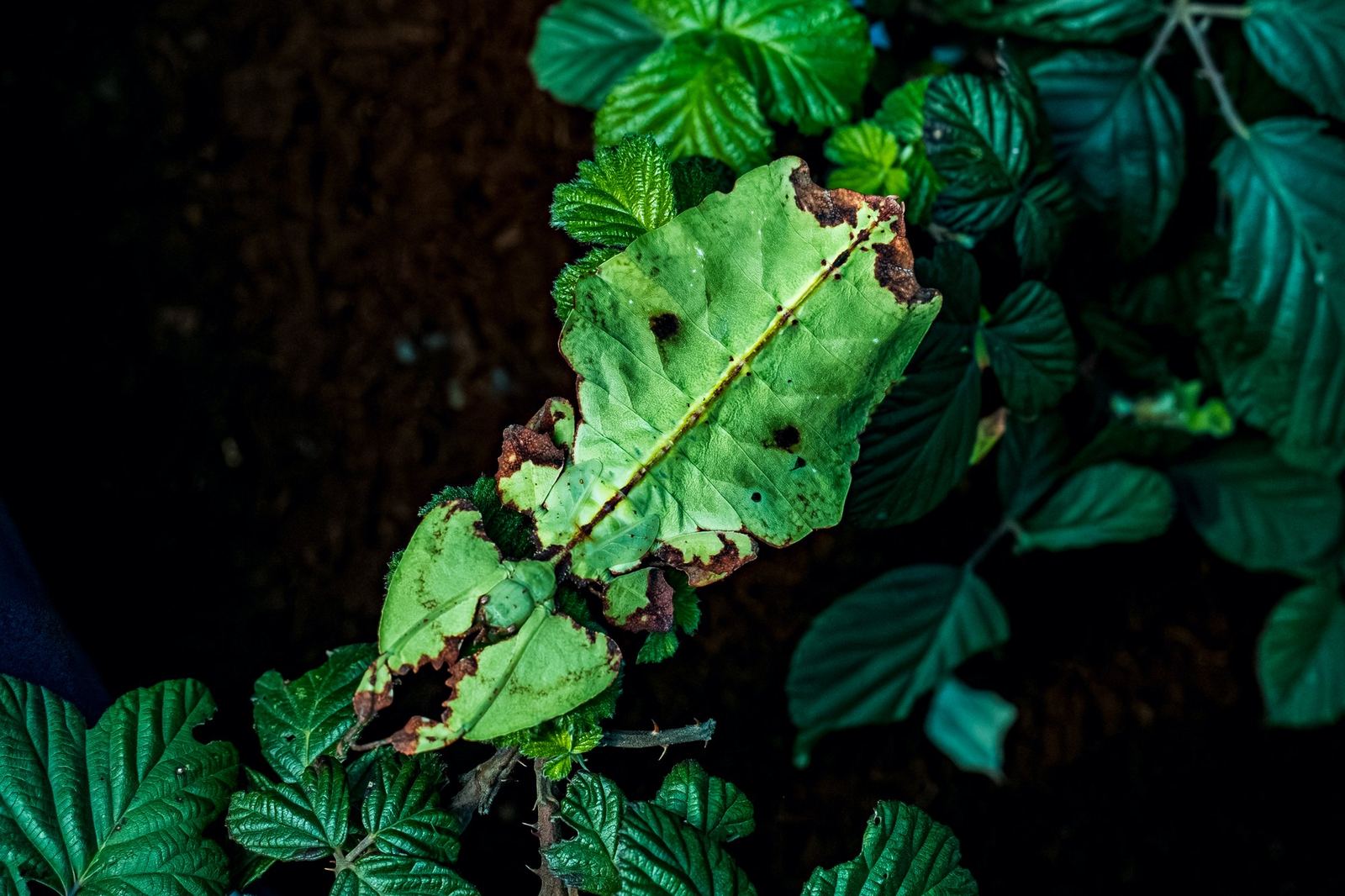
Giant walking leafPhyllium giganteumNot Evaluated
Walking leaves
The walking leaf is one of the most remarkable members of the insect world. Unlike most stick insects, this species has a broad, flat body with a leaf-vein pattern that almost perfectly imitates the shape and appearance of green leaves. Females resemble a leaf especially closely, while males are slimmer and generally fly better than they do.
This species is a classic example of mimicry: it imitates leaves not only with its shape but also with its movement, often swaying gently as if a leaf were blown by the wind. This behaviour helps to fool predators. Its defence relies almost entirely on staying hidden, so when in danger it most often freezes motionless.
Walking leaves are peaceful, slow-moving animals that eat only plant food. In captivity they are often fed bramble, rose or oak leaves. They are more active at night, when they feed and slowly wander from one leaf to another. Females are flightless or can fly only to a very limited extent, while the slimmer males with their well-developed wings move more skilfully among the vegetation.
An interesting feature of their reproduction is that females may be capable of virgin birth (parthenogenesis), so they can lay viable eggs even without males. Males are very rare. The eggs are dropped onto the ground and hatch after a longer development period. Interestingly, newly hatched young walking leaves are often brownish-red and look like ants, which may give them additional protection against predators. As they grow and moult, they gradually take on their characteristic leaf-like shape and green colouring.
The walking leaf’s camouflage is so effective that even researchers find it hard to spot among the vegetation in its natural habitat. The species is a popular terrarium animal and can be suitable even for beginners, as it is not aggressive and is relatively easy to keep, though it does need suitable humidity and fresh food for successful care.
Denison barbSahyadria denisoniiEndangered
In its natural habitats it lives in large shoals, in which coordinated movement helps individuals survive. Its conspicuous red stripe may also play a role in visual communication within the shoal. It is characterised by constant swimming and is adapted to strongly flowing waters. Young individuals often stay in shallower, gravel-bottomed stretches, while older specimens also occupy deeper parts. Its wild population is declining because of the loss of natural habitats. It is a popular ornamental aquarium fish.
RuddScardinius erythrophthalmusLeast Concern
A shoaling fish with a striking appearance
The rudd is a medium-sized, laterally flattened freshwater fish that lives mainly in still and slow-flowing waters. It belongs to the carp family. In Hungary it is a very common species. It gets its name from its striking, brightly coloured fins: the pelvic, anal and tail fins are bright red or orange, which gives it a particularly beautiful, “colourful” look. Its body has a golden-greenish shimmer, and its eye is often reddish. It likes to stay in waters thickly overgrown with plants. In terms of diet it is an omnivorous fish: it eats aquatic plants, algae and smaller invertebrates. Because of its smaller size, it is a less sought-after catch for anglers.
Zebra danioBrachydanio rerioNot Evaluated
An extremely fast, constantly moving shoaling fish. In its natural habitats it can adapt even to periodic water-level fluctuations. It breeds quickly, so it can build up a large population in a short time. It is a fish that reacts sensitively to environmental changes, especially in terms of light and temperature. One interesting fact about the species is that it is often used in neurological and genetic research. Its embryos are transparent, which makes it an important model species in laboratory experiments.
Green tree pythonMorelia viridisLeast Concern
Life in the canopy
The green tree python’s other Hungarian name is the emerald python. It is a giant snake with a special way of life: it lives in trees and shrubs and moves through the canopy. It usually waits patiently for its prey, coiled up in one spot. It can be active both day and night, although it mostly begins to move after dark. It hunts small mammals, nestlings and lizards, which, like other constrictors, it kills by squeezing. Because the green tree python lives mainly in trees and shrubs, it rarely comes down to the ground, usually only when looking for food, such as smaller mammals, or an occasional water source. Descents to the ground typically happen once or twice a week, depending on how much food is available in the canopy. The python drinks mostly from natural sources, such as rain-filled catchments, or by licking water droplets off leaves, but captive animals need fresh, clean water every day. Drinking and coming down to the ground are essential for survival, thermoregulation and hydration, since moisture is less evenly available in the canopy.
In appearance, the green tree python, found in Asia and Australia, closely resembles the emerald tree boa of the Americas (Corallus caninus), especially in the shape of its head and its laterally flattened body, yet the two snake species are only very distantly related. This similarity is the result of convergent evolution: because of a similar lifestyle and environment, the two look-alike snakes developed independently in two parts of the world.
In green tree pythons the young’s colouring is completely different from the adults’: hatchlings are usually yellow, orange or reddish, and only after a few months do they lose their vivid colours and take on the characteristic bright green shade of adulthood.
Brigitte’s rasboraBoraras brigittaeNot Evaluated
Brigitte’s rasbora is one of the smallest known members of the carp family. The reddish tones of its body are complemented by a dark longitudinal stripe, by which it is easily recognised. In its natural habitats the water is often strongly acidic and rich in tannins. It is a peaceful shoaling fish that is in constant motion as it searches for tiny plankton organisms.
See them
in person too
Buy tickets
Frequently asked questions
When is the shark feeding?
On Mondays at 14:30 the sharks are fed from above, and on Thursdays at 14:30 by divers, in the shark aquarium. You can find the times of the other feedings on the Feedings and keeper talks page.
Can we come in bad weather or rain?
Yes. Tropicarium is a fully covered indoor attraction inside the Campona building, so you can enjoy it comfortably whatever the weather, in rain or cold.
How long does a visit take?
At a relaxed pace, 1.5–2 hours on average. If you want to catch a feeding or spend more time at the ray-petting pool, allow a longer visit.
Can I take photos?
For personal use, yes, but flash is prohibited because it disturbs the animals.
You will find answers to further questions on the FAQ page.